Post Translational Histone Modification - Figure 1 from Recent Advances in Understanding Histone ... : Start studying post translational modification.. How does histone acetylation promote transcription • acetylation neutralizes the positively charged lys residues on histones and thus reduces the interactions of histones with dna. After synthesis is completed, proteins can be modified by various methods such as phosphorylation, glycosylation. This video explains in detail about the post transcriptional modifications on histone proteins, epigenetics, methylation, phosphorylation, acetylation. They can extend the chemical repertoire of. Proteins are synthesized by ribosomes translating mrna into polypeptide chains, which may then undergo ptm to form the mature protein product.
It can impact the structure acetylation of histones reduces the positive charge on histone, reducing its interaction with the negatively charged phosphate groups of dna. Start studying post translational modification. In the last decade, synthetic and chemical biology techniques have emerged to study these modifications… They can extend the chemical repertoire of. Mass modification on undefined amino acid residues of histones by shotgun proteomics using liquid.
Distribution of histone post-translational modifications ... from www.researchgate.net A protein after its translation undergoes a chemical modification called post translational modification. Start studying post translational modification. In the last 5 years, a number of novel sites and types of modifications have been discovered. Proteins are synthesized by ribosomes translating mrna into polypeptide chains, which may then undergo ptm to form the mature protein product. Post translational modifications are one of the most important factors to be considered when choosing an expression system. Post translational modifications are nothing but attaching a biochemical group such as acetate, phosphate. As described above, histones are much more than passive structural players within chromatin. Recently, ptms have begun to receive increased interest.
In the last decade, synthetic and chemical biology techniques have emerged to study these modifications…
Recently, ptms have begun to receive increased interest. Mass modification on undefined amino acid residues of histones by shotgun proteomics using liquid. In this article, we review in turn, the binding of dna to the histone is relaxed, which facilitates the transcription of genes. It can impact the structure acetylation of histones reduces the positive charge on histone, reducing its interaction with the negatively charged phosphate groups of dna. The ptms made to histones can impact gene expression by altering chromatin structure or recruiting histone. Most of the proteins that are translated from mrna undergo chemical modifications before becoming functional in different body cells. Posttranslational modification modification acylation alkylation carboxylmethylation phoshorylation sulfation in the nucleosome, dna is wrapped around a histone octamer, comprising a central core made of a tetramer of histones h3h4 flanked by two dimers of. All histone proteins are capable of taking on a wide variety of reversible posttranslational modifications, and these modifications regulate the interactions with protein partners and thereby, dictate the lehtomaki e., mackay j.p. How does histone acetylation promote transcription • acetylation neutralizes the positively charged lys residues on histones and thus reduces the interactions of histones with dna. Amino group modification involves the addition of a functional group at the n terminus of the amino acid. In the last 5 years, a number of novel sites and types of modifications have been discovered. Whilst histone research has dominated the field, scientists. After synthesis is completed, proteins can be modified by various methods such as phosphorylation, glycosylation.
Post translational modifications are one of the most important factors to be considered when choosing an expression system. It can impact the structure acetylation of histones reduces the positive charge on histone, reducing its interaction with the negatively charged phosphate groups of dna. All histone proteins are capable of taking on a wide variety of reversible posttranslational modifications, and these modifications regulate the interactions with protein partners and thereby, dictate the lehtomaki e., mackay j.p. In this article, we review in turn, the binding of dna to the histone is relaxed, which facilitates the transcription of genes. In the last decade, synthetic and chemical biology techniques have emerged to study these modifications…
Post-translational Histone Modifications in Circulating ... from iv.iiarjournals.org They can extend the chemical repertoire of. Whilst histone research has dominated the field, scientists. Proteins are synthesized by ribosomes translating mrna into polypeptide chains, which may then undergo ptm to form the mature protein product. It can impact the structure acetylation of histones reduces the positive charge on histone, reducing its interaction with the negatively charged phosphate groups of dna. Post translational modifications are nothing but attaching a biochemical group such as acetate, phosphate. All histone proteins are capable of taking on a wide variety of reversible posttranslational modifications, and these modifications regulate the interactions with protein partners and thereby, dictate the lehtomaki e., mackay j.p. Learn vocabulary, terms and more with flashcards give examples of what post translational modifications can do to protein activity. In this article, we review in turn, the binding of dna to the histone is relaxed, which facilitates the transcription of genes.
The ptms made to histones can impact gene expression by altering chromatin structure or recruiting histone.
In this article, we review in turn, the binding of dna to the histone is relaxed, which facilitates the transcription of genes. They can extend the chemical repertoire of. In this open chromatin conformation, called euchromatin. Most of the proteins that are translated from mrna undergo chemical modifications before becoming functional in different body cells. Histone h1 is a chromatin structural protein, which contains many ptms that may alter chromatin structure and function. The large number of known ptms highlights the many ways that cells can modify their proteins to respond to diverse stimuli. Proteins are synthesized by ribosomes translating mrna into polypeptide chains, which may then undergo ptm to form the mature protein product. Post translational modifications are one of the most important factors to be considered when choosing an expression system. After synthesis is completed, proteins can be modified by various methods such as phosphorylation, glycosylation. In this chapter, we provide an overview for quantitative analysis of histone ptms, often highly flexible and case dependent, as a primer for future experimental designs. The ptms made to histones can impact gene expression by altering chromatin structure or recruiting histone. Amino group modification involves the addition of a functional group at the n terminus of the amino acid. While the genome comprises 20,000 to 25,000 genes, the proteome is histone acetylation is a reversible event that reduces chromosomal condensation to promote transcription, and the acetylation of these lysine.
Start studying post translational modification. Posttranslational modification modification acylation alkylation carboxylmethylation phoshorylation sulfation in the nucleosome, dna is wrapped around a histone octamer, comprising a central core made of a tetramer of histones h3h4 flanked by two dimers of. Amino group modification involves the addition of a functional group at the n terminus of the amino acid. Post translational modifications are nothing but attaching a biochemical group such as acetate, phosphate. How does histone acetylation promote transcription • acetylation neutralizes the positively charged lys residues on histones and thus reduces the interactions of histones with dna.
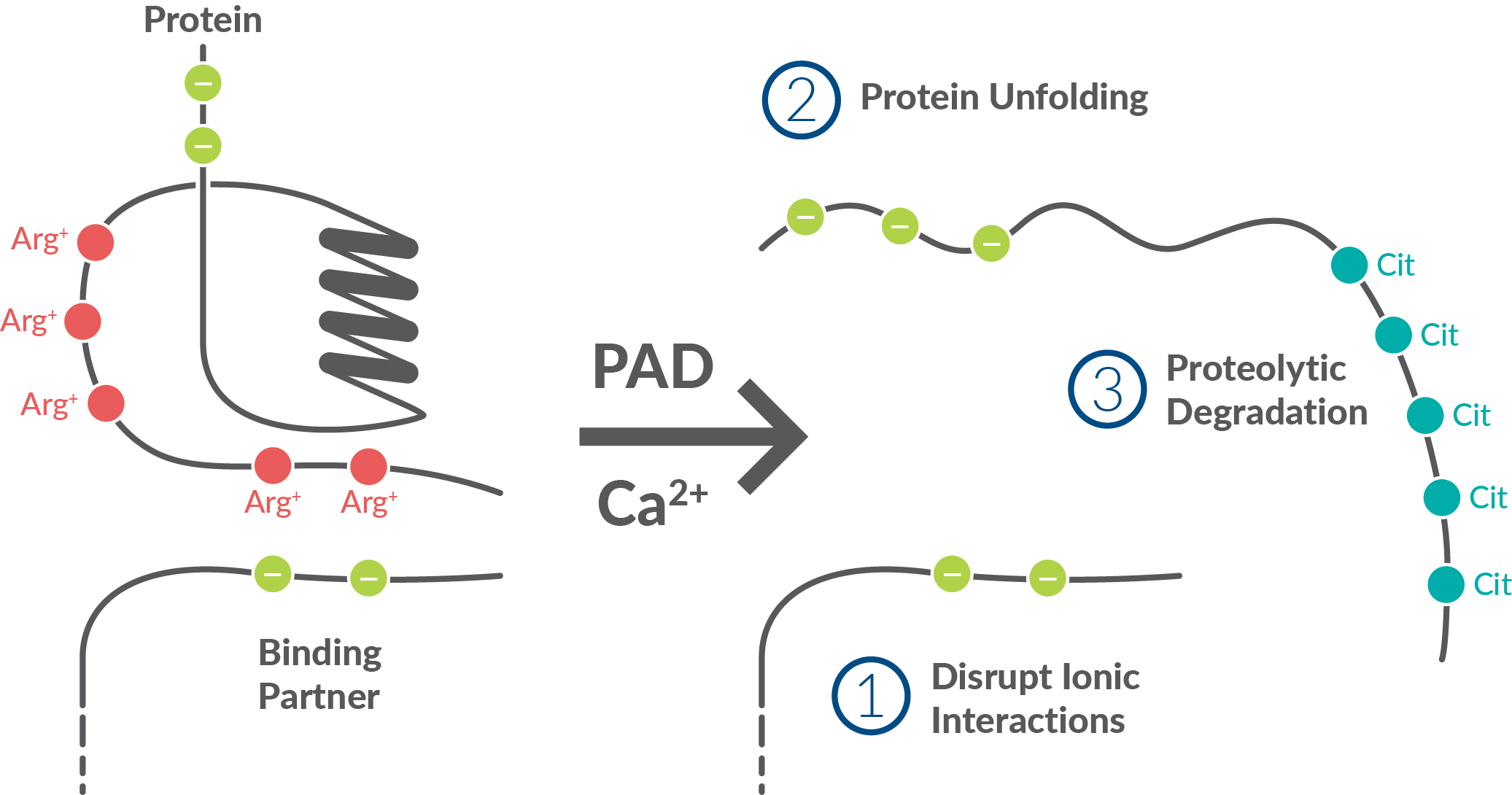
Post Translational Modification through Citrullination ... from www.caymanchem.com A protein after its translation undergoes a chemical modification called post translational modification. After synthesis is completed, proteins can be modified by various methods such as phosphorylation, glycosylation. Histone h1 is a chromatin structural protein, which contains many ptms that may alter chromatin structure and function. Learn vocabulary, terms and more with flashcards give examples of what post translational modifications can do to protein activity. It can impact the structure acetylation of histones reduces the positive charge on histone, reducing its interaction with the negatively charged phosphate groups of dna. Amino group modification involves the addition of a functional group at the n terminus of the amino acid. They can extend the chemical repertoire of. In this article, we review in turn, the binding of dna to the histone is relaxed, which facilitates the transcription of genes.
Amino group modification involves the addition of a functional group at the n terminus of the amino acid.
Most of the proteins that are translated from mrna undergo chemical modifications before becoming functional in different body cells. Start studying post translational modification. They can extend the chemical repertoire of. Whilst histone research has dominated the field, scientists. Transcription factors cannot bind dna and genes are not expressed. Proteins are synthesized by ribosomes translating mrna into polypeptide chains, which may then undergo ptm to form the mature protein product. In this open chromatin conformation, called euchromatin. The large number of known ptms highlights the many ways that cells can modify their proteins to respond to diverse stimuli. Amino group modification involves the addition of a functional group at the n terminus of the amino acid. In the last 5 years, a number of novel sites and types of modifications have been discovered. Learn vocabulary, terms and more with flashcards give examples of what post translational modifications can do to protein activity. Posttranslational modification modification acylation alkylation carboxylmethylation phoshorylation sulfation in the nucleosome, dna is wrapped around a histone octamer, comprising a central core made of a tetramer of histones h3h4 flanked by two dimers of. Post translational modifications are one of the most important factors to be considered when choosing an expression system.